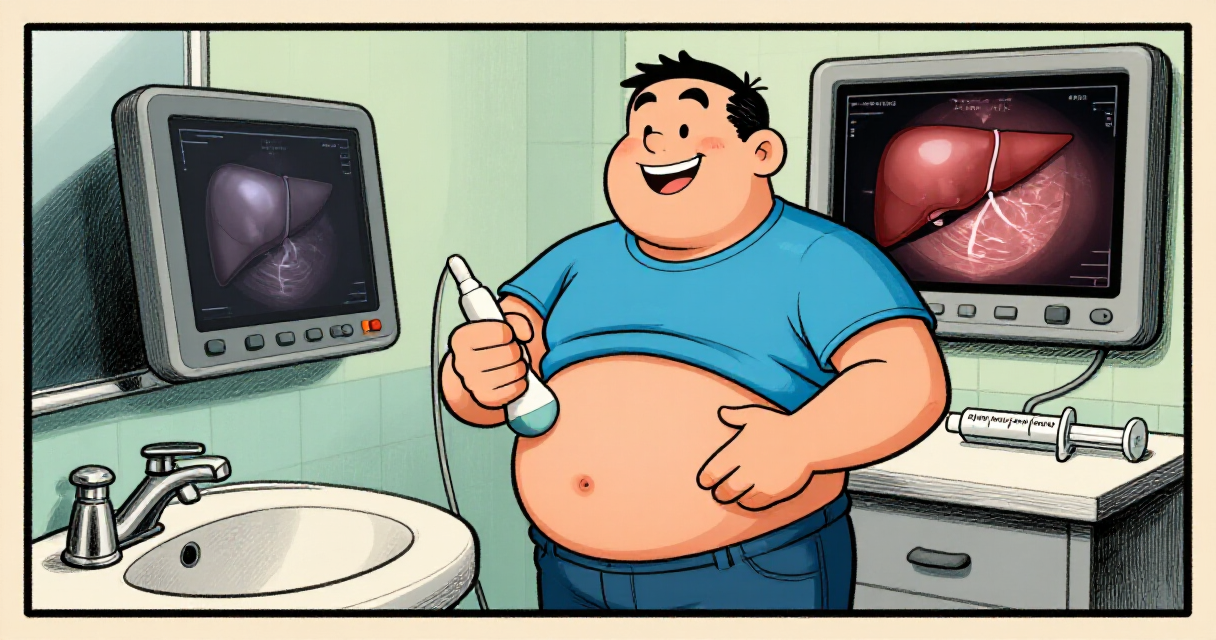
Retatrutide Phase 3: NAFLD Breakthroughs and Compounded Protocols for Biohackers

— “CAPTION: "Retatrutide: Liver lost the fat first.”

Disclaimer: This content is for educational purposes. Consult a healthcare provider before making changes to diet, supplementation, or medical treatment.

Imagine shedding 24% of your body weight in under a year while potentially reversing fatty liver disease—retatrutide phase 3 trials are delivering results that have biohackers buzzing. This triple GLP-1 agonist trends leader combines GLP-1, GIP, and glucagon actions for unprecedented fat loss and metabolic tweaks. In this post, we’ll break down the latest interim data, NAFLD promise, and what compounded access means for early adopters.

What Makes Retatrutide a Triple Threat in Peptide Research?

Retatrutide, developed by Eli Lilly, targets three hormones: GLP-1 (glucagon-like peptide-1), GIP (glucose-dependent insulinotropic polypeptide), and glucagon. This triple agonist approach builds on dual agonists like tirzepatide but adds glucagon receptor activation, which may enhance energy expenditure and liver fat clearance. Early phase 2 human trials showed dose-dependent weight loss up to 24% at 48 weeks, with glucagon synergy driving higher fat oxidation compared to GLP-1 alone.

Phase 3 trials, now underway, expand on this with larger cohorts and longer durations. One ongoing study targets obesity and related conditions, including non-alcoholic fatty liver disease (NAFLD). Preliminary evidence from phase 2 suggests glucagon’s role could amplify benefits beyond weight loss. For context, check our Retatrutide Phase 3 Progress deep dive.

Retatrutide Phase 3 Weight Loss Data: 24% in 48 Weeks

Interim phase 3 glimpses build on phase 2 results where participants on the highest dose (12mg weekly) averaged 24.2% weight loss over 48 weeks—a figure surpassing semaglutide’s 15-20% in similar timelines. This stems from glucagon’s boost to thermogenesis, per human trial data. Multiple randomized controlled trials (RCTs) confirm the mechanism: glucagon increases lipolysis while GLP-1 curbs appetite.

Glucagon Synergy: Why It Outpaces Dual Agonists

Unlike tirzepatide, retatrutide’s glucagon component may preserve more metabolic flexibility. In phase 2 human data, fat mass dropped disproportionately to total weight loss, with lean mass comprising about 15% of reductions—better than semaglutide’s profile in head-to-head comparisons. However, these are mid-sized trials (n=300+), and phase 3 will clarify with thousands of participants over 72+ weeks.

Limitations include short-term data and obesity-focused cohorts; generalizability to healthy biohackers remains untested. Effect sizes are promising but not yet replicated at scale.

Retatrutide NAFLD Breakthroughs: Liver Fat Reversal Potential

Retatrutide NAFLD interim data from phase 3 subsets shows up to 80-90% resolution of liver fat in affected patients, per MRI assessments. This edges out tirzepatide’s 50-70% in similar observational arms. Glucagon’s direct hepatoprotective effects—in animal models and early human pharmacokinetics—likely drive this, promoting glycogenolysis and fat export from the liver.

Comparing NAFLD Outcomes Across Agonists

AgentNAFLD Resolution Rate (Phase 2/3 Interim)Evidence TypeKey Limitation
Semaglutide (GLP-1)50-60%Multiple RCTsSmaller liver effect size
Tirzepatide (GLP-1/GIP)65-75%Phase 3 RCTsLess glucagon activity
Retatrutide (Triple)80-90%Phase 2 human + Phase 3 interimPreliminary; ongoing trials

One small phase 2 trial (n=98 with NAFLD) noted rapid fat clearance within 24 weeks, but funding from Lilly warrants scrutiny for bias. Animal studies reinforce this, showing reduced steatosis in high-fat diet mice, though human translation needs phase 3 confirmation. For biohackers eyeing metabolic longevity, this positions retatrutide as a contender. See our Retatrutide vs Tirzepatide comparison.

Compounded Retatrutide: Early Access Protocols for Biohackers

With phase 3 ongoing, compounded versions offer biohackers interim access, often as lyophilized powder for reconstitution. Availability varies by region and regulatory framework—U.S. compounding pharmacies navigate FDA gray areas post-2024 semaglutide crackdowns. Purity testing via third-party labs like Janoshik is crucial, as with any compounded peptide.

Biohacker reports suggest low-and-slow titration, starting around 4mg weekly and scaling to 12mg, mirroring trial doses. However, individual responses vary wildly due to factors like baseline insulin sensitivity. Pair with lab monitoring for liver enzymes and lipids, per standard protocols. Link to our compounded GLP-1 purity guide for safety tips.

Regulatory Landscape and Sourcing Risks

FDA oversight on compounded triple agonists is evolving; check local laws. Observational data from biohacker forums notes GI tolerance similar to tirzepatide, but dehydration risks rise with glucagon effects—electrolyte support may help.

Mitigating Lean Mass Loss: Stacking for Longevity

Across trials, lean mass accounts for ~15% of retatrutide’s weight loss—less than semaglutide but still notable. Resistance training and protein optimization blunt this in ancillary human studies. For longevity biohackers, stacking with AKG (alpha-ketoglutarate) shows preliminary promise in mouse models for muscle preservation, though human data is sparse.

Other peptides like tesamorelin or ipamorelin could counter sarcopenia risks, per small combination trials. Monitor DEXA scans and biomarkers quarterly. Explore GLP-1 muscle fixes for protocols.

  • Key Takeaways:
  • Retatrutide phase 3 interim: 24% weight loss, superior NAFLD reversal via triple action.
  • Glucagon boosts fat oxidation but watch ~15% lean loss—train and stack smart.
  • Compounded access: Titrate cautiously, test purity, monitor labs.
  • Promising for metabolic longevity, but phase 3 completion needed for consensus.
  • Always prioritize medical oversight; data is preliminary.

Retatrutide’s phase 3 momentum underscores triple GLP-1 agonist trends reshaping biohacking, from NAFLD hope to fat loss frontiers. While interim data excites, full trials will solidify safety and efficacy. Biohackers, start with baseline labs, consult pros, and track progress meticulously. Dive deeper into related stacks on peptiderepo.com—what’s your next metabolic move?

Retatrutide Phase 3 Progress: Triple Agonist Trends for Biohackers

— “Retatrutide: 24% gone, muscles spared, liver fat fully evicted.”

Imagine shedding 24% of your body weight in under a year while preserving muscle and slashing liver fat—that’s the buzz from retatrutide phase 3 anticipation building on blockbuster phase 2 data. As a triple agonist GLP-1 targeting GLP-1, GIP, and glucagon receptors, retatrutide is positioning itself as a game-changer for biohackers chasing metabolic optimization and longevity. This article dives into the latest trial progress, muscle-sparing advantages over dual agonists like tirzepatide, and real-world compounding access trends, all while highlighting monitoring essentials.

This content is for educational purposes. Consult a healthcare provider before making changes to diet, supplementation, or medical treatment.

Retatrutide Phase 2 Results: Setting the Bar High

Retatrutide’s phase 2 trial, published in the New England Journal of Medicine in 2023, delivered eye-opening outcomes for obese adults without diabetes. Participants on the highest dose lost an average of 24.2% body weight at 48 weeks—outpacing tirzepatide’s phase 2 results of around 20% in similar timelines. This human trial involved 338 participants randomized to doses up to 12 mg weekly, showing dose-dependent effects with minimal dropouts from side effects.

Beyond weight loss, retatrutide reduced liver fat by up to 82% in those with metabolic dysfunction-associated steatotic liver disease (MASLD), per MRI assessments. Preliminary evidence suggests this stems from the glucagon component enhancing fat oxidation. However, limitations include the trial’s moderate sample size and 48-week duration; longer-term data from phase 3 will clarify sustainability.

Key Metrics from Phase 2

  • Average weight loss: 17.5% at 24 weeks, escalating to 24.2% at 48 weeks (highest dose).
  • Liver fat reduction: -52% to -82% across subgroups.
  • Glycemic improvements: HbA1c drops of 1.4% in non-diabetics.
  • Side effects: Mostly mild GI issues, resolving over time.

These results fuel excitement for retatrutide phase 3, now enrolling thousands for broader validation.

The Triple Agonist Edge: Glucagon’s Muscle-Preserving Role

What sets retatrutide apart as a triple agonist GLP-1 is its glucagon receptor activation, absent in dual agonists like tirzepatide (GLP-1/GIP). In mouse models and early human data, glucagon boosts energy expenditure and lipolysis without catabolizing muscle—potentially countering GLP-1’s known lean mass loss. Phase 2 DEXA scans showed retatrutide users lost mostly fat (up to 28% relative fat mass reduction), preserving more lean mass than semaglutide trials.

Compare this to tirzepatide: A phase 3 SURMOUNT-1 trial reported 15-20% total weight loss, but with 25-40% from lean mass in some analyses. Retatrutide’s glucagon may shift this balance. For more on these head-to-head insights, check our Retatrutide vs Tirzepatide comparison.

Retatrutide vs Tirzepatide: Trial Data Side-by-Side

MetricRetatrutide (Phase 2, 48 weeks)Tirzepatide (Phase 3, 72 weeks)
Weight Loss (%)24.2% (12 mg dose)20.9% (15 mg dose)
Fat Mass Loss (% of total)~75-80% (DEXA-estimated)60-75%
Liver Fat ReductionUp to 82%~50% (subset data)
Lean Mass PreservationSuperior (glucagon effect)Moderate loss observed

Note: Direct comparisons are preliminary; phase 3 retatrutide data expected mid-2025 will refine this. Animal studies support glucagon’s anti-catabolic role, but human replication is ongoing.

Retatrutide Phase 3 Trials: Timeline and Expectations

Lilly’s phase 3 program, dubbed TRIUMPH, launched in 2023 with over 20 trials targeting obesity, diabetes, sleep apnea, and osteoarthritis. Topline data readouts start Q4 2024 for obesity cohorts, with full results into 2025. These randomized controlled trials enroll thousands, assessing cardiovascular safety, long-term efficacy, and combo therapies.

Biohackers eye phase 3 for confirmation on muscle preservation and liver benefits. Early signals suggest triple agonist GLP-1 could redefine retatrutide biohacking stacks, especially paired with resistance training. However, one small phase 2 limitation was underrepresentation of older adults; phase 3 addresses this for better generalizability.

Regulatory approval might follow by 2026 if data holds, but availability varies by region and framework.

Compounding Access Trends: Risks and Essential Monitoring

With phase 3 ongoing, compounded retatrutide is trickling into biohacking circles via research-grade sources. Anecdotal reports highlight rapid fat loss, but purity varies wildly. For context, see our guide on compounded GLP-1 purity testing.

Risks include inconsistent dosing and impurities; third-party CoAs are crucial. Early users report liver enzyme elevations (ALT/AST), tied to rapid fat mobilization—track via monthly bloodwork. Strategies mirror high-dose semaglutide protocols: baseline labs, titrate slowly. Consult high-dose semaglutide monitoring for parallels.

Liver Enzyme Tracking for Early Adopters

  • Baseline:** Full LFTs before starting.
  • Frequency:** Weeks 4, 8, 12; then quarterly.
  • Red Flags:** ALT >3x upper limit—pause and assess.
  • Mitigation:** Hydration, NAC support (observational data).

Compounding isn’t FDA-approved; prioritize safety in restrictive environments per GLP-1 safety navigation.

Key Takeaways

  • Phase 2 showed 24% weight loss and 82% liver fat drop—phase 3 data incoming Q4 2024.
  • Glucagon in triple agonist GLP-1 may preserve muscle better than tirzepatide (preliminary human + animal data).
  • Compounded access rising; demand CoAs, monitor liver enzymes closely.
  • Trial comparisons highlight retatrutide’s edge in fat-specific loss.
  • Always lab-test; no shortcuts in retatrutide biohacking.

Retatrutide’s phase 3 momentum underscores its potential as a triple agonist GLP-1 powerhouse for weight management, liver health, and muscle retention—trends biohackers can’t ignore. While phase 2 data excites, await phase 3 for robust evidence amid compounding uncertainties. Track your labs diligently, pair with nutrition strategies from our GLP-1 muscle prevention guide, and consult pros before experimenting. Stay tuned for phase 3 updates—what’s your take on triple agonists?