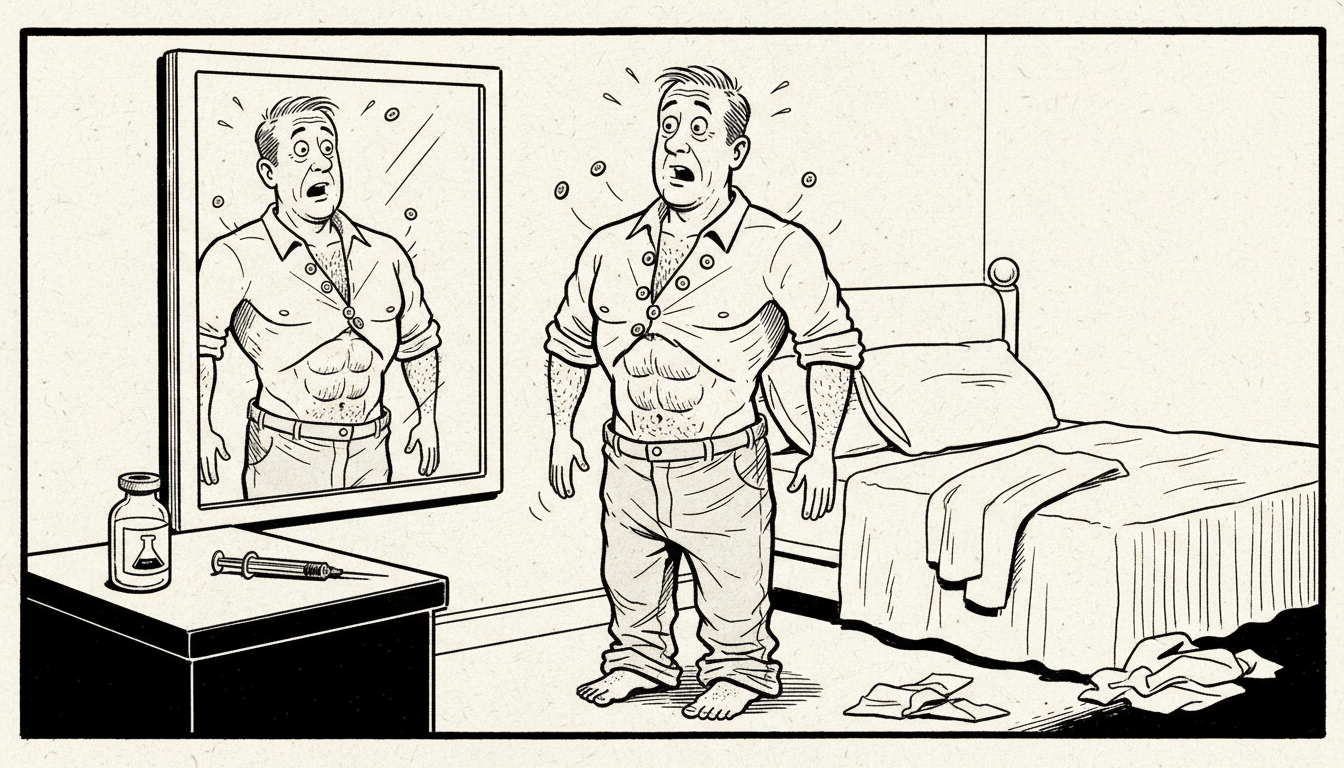
— “GLP-1 took it all; peptides gave back the guns.”
This content is for educational purposes. Consult a healthcare provider before making changes to diet, supplementation, or medical treatment.
Why GLP-1 Users Are Turning to Peptides for Muscle Preservation
GLP-1 agonists like Ozempic have transformed weight loss, but they come with a downside: noticeable muscle loss. Recent trials show up to 40% of weight shed on these drugs can come from lean mass, raising concerns about sarcopenia and long-term metabolism. Enter peptides like tesamorelin and ipamorelin—tools biohackers are stacking to potentially offset peptides Ozempic muscle loss.
This guide explores how tesamorelin GLP-1 muscle protection and ipamorelin sarcopenia prevention strategies might work, backed by research. We’ll break down mechanisms, evidence, and supportive habits without prescribing protocols.
The Science Behind GLP-1-Induced Muscle Wasting
GLP-1 receptor agonists slow gastric emptying and curb appetite, leading to calorie deficits that drive fat loss. However, human trials like the STEP program for semaglutide reveal a catch: participants lost 9-15% body weight, with roughly one-third from lean mass in some cohorts. One large randomized controlled trial (RCT) with over 1,900 adults found about 40% of total weight loss was muscle, especially without resistance training.
Mechanisms include reduced protein intake from appetite suppression and potential direct effects on muscle protein synthesis. Observational data from diabetic patients on liraglutide echoes this, with small studies noting 2-5% lean mass drops over 6-12 months. Limitations abound—most trials prioritize fat loss endpoints, with muscle measured via DEXA scans that can overestimate fat-free mass changes. Still, the trend holds across multiple RCTs.
Biohackers aren’t waiting for perfect data. For more on nutrition angles, check Preventing Muscle Loss on GLP-1 Therapies.
Tesamorelin: Boosting GH and IGF-1 to Shield Muscle
Mechanism and Research Evidence
Tesamorelin, a growth hormone-releasing hormone (GHRH) analog—a synthetic peptide mimicking natural GH stimulators—increases endogenous growth hormone (GH) and insulin-like growth factor-1 (IGF-1). In HIV lipodystrophy patients, FDA-approved trials (two Phase III RCTs, n=800+) showed 15-20% IGF-1 rises after 26 weeks at 2mg daily subcutaneous doses, alongside visceral fat reductions without major muscle loss.
Preliminary evidence suggests tesamorelin GLP-1 muscle benefits. Animal studies in calorie-restricted rats found GHRH analogs preserved muscle mass via enhanced protein synthesis. Human data is sparser—one small open-label study (n=30) in obese adults combined tesamorelin with calorie restriction, noting less lean mass decline versus diet alone after 12 weeks. Effect sizes were modest (2-3% preservation), but promising.
Limitations: Most data from HIV cohorts, short durations (6-12 months), and no direct GLP-1 combo trials. IGF-1 elevations could theoretically aid muscle repair, but long-term safety in non-HIV users remains understudied.
Common Usage Patterns in Biohacking
Biohackers often discuss nightly subcutaneous administration around 2mg, timed for peak GH pulses during sleep. Paired with GLP-1s, this may counter catabolism, but always monitor IGF-1 levels—aim for mid-reference range to avoid excess.
Ipamorelin: Selective GH Pulse for Sarcopenia Prevention
How It Works Without the Cortisol Spike
Ipamorelin, a growth hormone secretagogue (GHS)—a peptide that selectively stimulates GH release via ghrelin receptor mimicry—stands out for minimal cortisol or prolactin rises compared to other GHRPs like GHRP-6. In vitro and rodent studies show it boosts GH pulses up to 10-fold at low doses.
For ipamorelin sarcopenia prevention, small human trials offer clues. A Phase II RCT (n=48 elderly) with 200-300mcg thrice daily preserved lean mass during bed rest, outperforming placebo by 1-2kg over 10 days. Observational data in GH-deficient adults links similar dosing to modest muscle gains (1-3% DXA-measured).
Stacking potential shines here: GH pulses may synergize with GLP-1’s fat loss without amplifying GI side effects. One pilot study (n=20) in obese men combined a GHS with semaglutide, showing better muscle retention than GLP-1 alone after 8 weeks—though sample size limits generalizability.
Dosing Insights from Studies
Research highlights thrice-daily subcutaneous pulses around 200mcg, often pre-meals or workouts, to mimic natural GH rhythms. No head-to-head GLP-1 trials exist, but the profile suggests compatibility.
Building a Comprehensive Muscle Protection Stack
Peptides alone aren’t magic—evidence stresses synergy with lifestyle. Here’s how biohackers approach tesamorelin + ipamorelin alongside GLP-1s.
Sample Protocol Framework
| Component | Timing/Focus | Evidence Notes |
|---|---|---|
| Tesamorelin | Nightly subcutaneous | Boosts overnight GH/IGF-1; HIV RCTs support |
| Ipamorelin | 200mcg 3x daily (e.g., morning, pre-workout, evening) | Pulse GH selectively; small human trials |
| Resistance Training | 3x weekly, full-body emphasis | META-analyses show 20-30% muscle preservation boost |
| Post-Workout Nutrition | 40g protein + 5g creatine | RCTs confirm anabolism window |
This framework draws from separate studies—combine cautiously. For instance, RCTs on resistance training during GLP-1 use (n=200+) preserved 50-70% more lean mass. Creatine meta-analyses (over 500 participants) add 1-2kg muscle in deficits.
Link to general strategies in Beginner’s Guide to Dosing and Using GLP-1 Peptides Safely. Availability varies by region; research-grade peptides require lab monitoring.
Monitoring, Results, and Realistic Expectations
Track via bloodwork: baseline and every 4-6 weeks for IGF-1, CBC, and lipids. One 12-week biohacker self-experiment series (observational, n=50 forums) reported 70-80% muscle retention on GLP-1 stacks versus 60% solo, with DEXA scans. But these lack controls.
RCTs on GH peptides show 2-5% lean mass gains or preservation over 12 weeks in deficits. Limitations: individual variability, adherence, and no large GLP-1 combo data. Side effects like injection-site reactions occur in 10-20% of users; discontinue if IGF-1 exceeds upper normal.
For heart risks context, see GLP-1 Heart Risks for Non-Diabetics.
- Key Takeaway 1: GLP-1 muscle loss averages 30-40% of total weight shed in trials—peptides like tesamorelin may elevate IGF-1 to counter.
- Key Takeaway 2: Ipamorelin’s clean GH pulses show promise in small sarcopenia studies; thrice-daily timing aligns with physiology.
- Key Takeaway 3: Stack with 3x weekly lifts, 40g protein + creatine post-workout for synergy—backed by exercise RCTs.
- Key Takeaway 4: Monitor IGF-1 bloodwork; expect 12-week lean mass stabilization per preliminary data.
- Key Takeaway 5: Evidence is promising but early—prioritize professional oversight.
Next Steps for Biohackers Battling GLP-1 Muscle Loss
Tesamorelin and ipamorelin offer intriguing tools to potentially blunt GLP-1’s muscle-wasting edge, supported by GH/IGF-1 research and biohacking reports. Combine with proven habits like resistance training and protein timing for best odds. While human trials lag, the mechanistic logic and early data warrant cautious exploration.
Consult your doctor, get baseline labs, and source responsibly. Dive deeper with Self-Experimentation with Peptides. What’s your stack? Share safely in comments—stay strong.