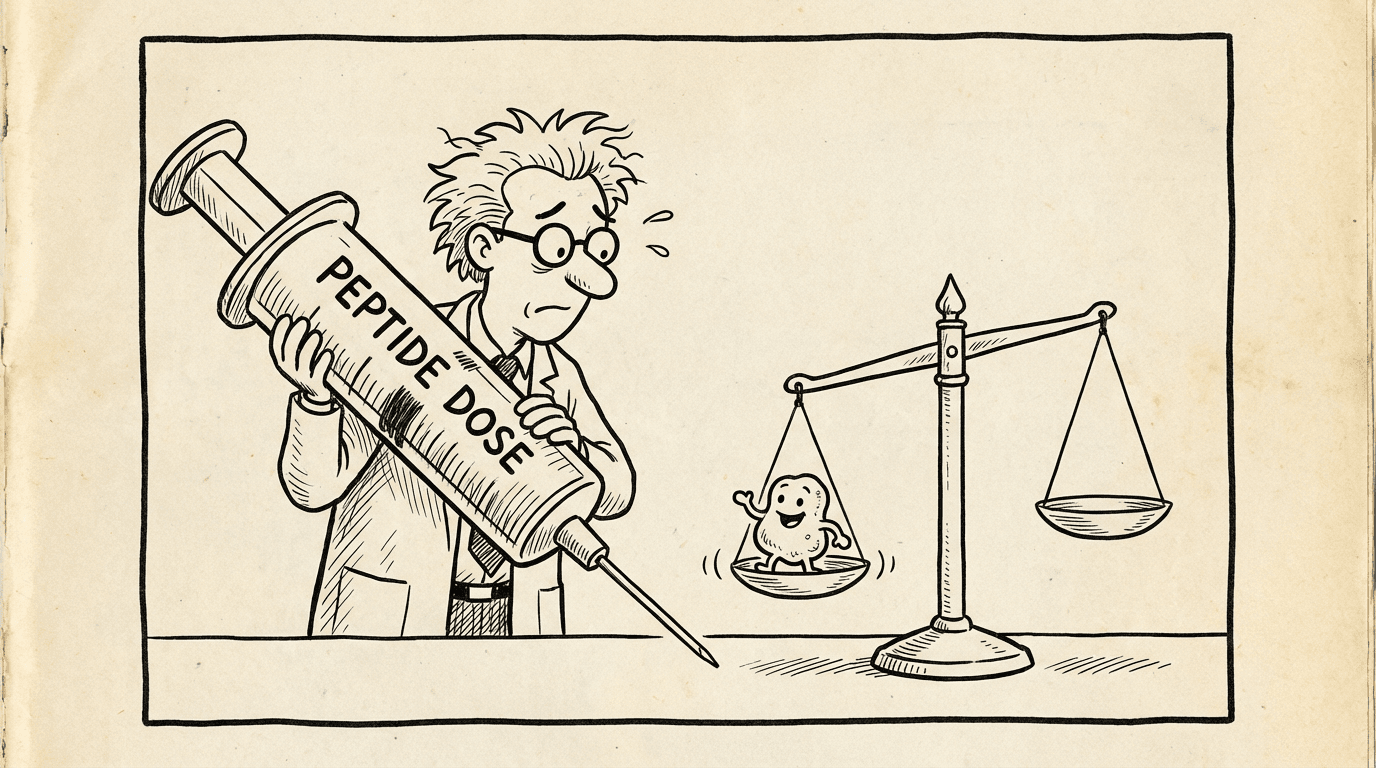
— “CAPTION: "Finding the sweet spot—before the molecule takes over.”
A Practical Guide to Peptide Dosing for Safety and Efficacy
Peptide dosing safety requires finding the optimal balance for efficacy. GLP-1, GLP-2, and GLP-3 demand precise dosing protocols.
1. Why Proper Peptide Dosing Is Crucial for Safety and Effectiveness
- Maximizes therapeutic benefits while minimizing side effects
- Avoids overdose or underdose, safeguarding your health
- Supports personalized treatment based on individual responses and goals
2. How to Determine the Right Peptide Dose
- Start Low and Titrate: Begin with conservative doses and gradually increase based on your response and tolerance. This approach minimizes adverse reactions and allows your body to adapt safely.
- Consult Reliable Resources: Use trusted sources such as peptide repo or peer-reviewed scientific literature to identify appropriate dosing ranges for peptides like GLP-1, GLP-2, or GLP-3. For detailed peptide information, visit peptiderepo.com.
- Consider Personal Factors: Age, weight, health status, and previous peptide experience influence optimal dosing. Personalization is key to safety and efficacy.
- Follow Evidence-Based Guidelines: Adhere to established dosing recommendations to stay within safe and effective limits.
3. Optimizing Timing and Frequency for Peptide Injections
- Align with Biological Rhythms: Schedule injections to coincide with your body’s natural hormonal cycles or metabolic peaks to enhance effectiveness.
- Maintain Consistent Timing: Regular injection schedules support stable blood levels, reducing fluctuations that can impact results.
- Adjust Frequency as Needed: Different peptides require varying dosing frequencies—some daily, others less frequent. Follow specific guidelines for each peptide to optimize outcomes.
- Respond to Your Body: Monitor how your body responds and modify timing if side effects occur or desired effects are not achieved.
4. Monitoring and Adjusting Peptide Doses Safely
- Track Symptoms and Biomarkers: Keep detailed records of side effects, energy levels, appetite changes, and other relevant metrics to assess your response.
- Watch for Adverse Reactions: Symptoms like nausea, dizziness, or allergic responses should prompt dose reevaluation and consultation with a healthcare professional.
- Schedule Regular Medical Check-Ups: Routine blood tests and medical assessments help monitor safety and detect potential issues early.
- Be Flexible with Dosing: Adjust doses up or down based on your body’s feedback and professional guidance, ensuring a balance between safety and efficacy.
5. Reliable Resources for Safe Peptide Use
- Peptide Repo: For research-backed dosing information, consult reputable sources like peptide repo. While not a vendor, it offers valuable insights into peptide safety and best practices. For comprehensive peptide data, visit peptiderepo.com.
- Peer-Reviewed Literature: Stay informed with current scientific studies to understand the safety profiles and efficacy of various peptides.
- Community and Expert Advice: Engage with knowledgeable practitioners and experienced users for practical insights and personalized guidance.
Conclusion: Prioritize Safety for a Successful Peptide Journey
Optimizing peptide dosing is essential to achieving your health, longevity, and performance goals safely. By understanding how to determine appropriate doses, schedule injections effectively, and monitor your body’s response, you can maximize benefits while minimizing risks. Remember, safe peptide use involves ongoing education, professional guidance, and reliance on reputable resources like peptide repo. For comprehensive, research-based peptide information, visit peptiderepo.com. Embark on your peptide journey with confidence, always prioritizing safety and informed decision-making.