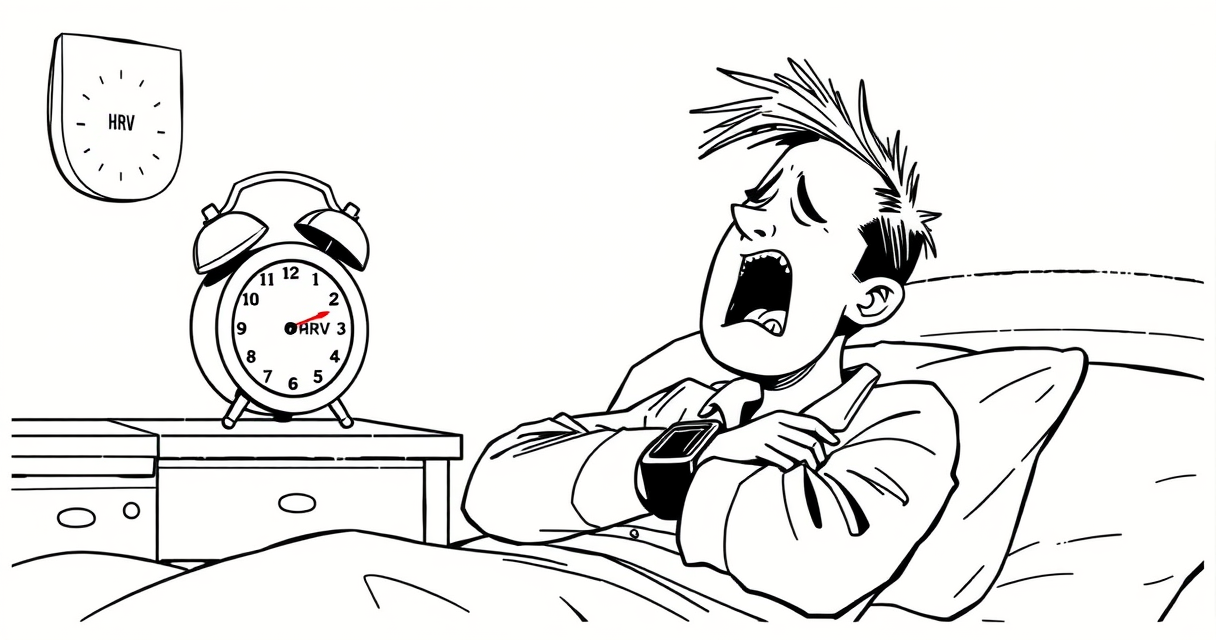
— “DSIP + Epitalon: HRV perfect, wake-up time beginner mode.”
This content is for educational purposes. Consult a healthcare provider before making changes to diet, supplementation, or medical treatment.
Struggling to get deep, restorative sleep despite your Oura ring screaming for better recovery? You’re not alone—many biohackers chase marginal gains in HRV only to hit a wall with shallow sleep stages. The DSIP Epitalon stack emerges as a beginner-friendly option in peptide research, potentially supporting sleep onset and long-term recovery markers like heart rate variability (HRV).
Delta sleep-inducing peptide (DSIP)—a naturally occurring neuropeptide—and Epitalon (a synthetic tetrapeptide)—linked to telomerase activity—show preliminary promise in animal and small human studies for sleep depth and cellular repair. This guide breaks down a simple beginner peptides sleep approach, drawing from available research without overpromising results.
What Are DSIP and Epitalon? A Quick Primer
DSIP, first identified in the 1970s, gained attention for its potential role in promoting slow-wave sleep. Early rabbit studies suggested it could induce delta EEG patterns associated with deep sleep. Human trials remain limited—one small pilot from the 1980s reported improved sleep efficiency in insomniacs, but larger randomized controlled trials (RCTs) are lacking.
Epitalon, derived from epithalamin, targets the pineal gland and telomerase—an enzyme tied to cellular aging. Russian rodent studies indicate it may extend lifespan by up to 25% via telomere protection. A handful of small human observational studies link it to better melatonin regulation and subjective recovery, though effect sizes vary and long-term data is preliminary.
Key Differences in Their Mechanisms
DSIP appears to modulate GABA receptors and stress hormones like cortisol, potentially easing sleep onset. Epitalon, in contrast, influences circadian rhythms and DNA repair pathways. Stacking them could complement short-term sleep support with longer-term resilience, per in vitro and animal models.
Why Combine DSIP and Epitalon for Beginner Biohackers?
Sleep depth and HRV often tank under stress or aging, limiting biohacking progress. Research hints that a DSIP Epitalon stack might address both acutely and chronically. For instance, DSIP’s effects on sleep architecture could boost next-day HRV, while Epitalon’s telomerase support may enhance overall recovery in preliminary cell studies.
Animal data shows DSIP reducing sleep latency by 20-30% in stressed models. Epitalon, in mouse trials, improved HRV metrics alongside longevity markers. Human anecdotes from biohacking forums align with these, but placebo-controlled evidence is sparse—limitations include small samples (n<50) and short durations (weeks, not months).
Competing views exist: some researchers question DSIP’s reproducibility due to purity issues in early studies. Epitalon faces skepticism over translation from rodent to human telomeres. Still, for newcomers eyeing Epitalon HRV recovery, this stack’s low-side profile in reports makes it intriguing.
Availability varies by region and regulatory framework—check local guidelines. For prep basics, see our Peptide Prep 101 guide.
Building a Safe Beginner DSIP Epitalon Stack
Start low and titrate gradually to gauge tolerance, as individual responses differ. Research suggests subcutaneous administration for both, timed for maximal effect—DSIP near bedtime, Epitalon in the morning or evening.
Week-by-week progression might look like this in self-experimentation contexts:
- Week 1: Introduce DSIP alone at low levels to assess sleep onset.
- Weeks 2-3: Layer in Epitalon at minimal doses, monitoring for fatigue or vivid dreams.
- Week 4+: Stabilize if metrics improve, cycling off every 4-6 weeks to avoid adaptation.
Cofactors like zinc (supports telomerase pathways per observational data) and magnesium glycinate (aids GABA function in RCTs) may enhance effects. One study in elderly humans found 30mg zinc daily correlating with better sleep quality, though causality isn’t proven.
Never replace medical sleep aids. For safety in restricted environments, review our self-experimentation guide.
Potential Side Effects and Mitigation
| Peptide | Common Reports | Management |
|---|---|---|
| DSIP | Daytime drowsiness (rare) | Lower dose, earlier timing |
| Epitalon | Vivid dreams, mild nausea | Titrate slowly, with food |
These stem from small cohort data; discontinue if issues arise.
Tracking Your Progress: Oura Ring and Beyond
Oura ring users love quantifiable wins—focus on sleep score, deep sleep percentage, and resting HRV. Baseline for 1-2 weeks pre-stack, then log weekly averages. Improvements like +10-20% deep sleep or +5ms HRV could signal response, mirroring patterns in peptide user logs.
Combine with subjective tracking: wake energy, dream recall. Apps like WHOOP or Garmin complement Oura for HRV trends. Limitations? Wearables overestimate deep sleep by 10-15% vs. PSG (polysomnography), per validation studies.
For muscle preservation during recovery tweaks, check nutrition strategies here.
Key Takeaways
- DSIP shows preliminary animal evidence for deeper sleep onset; Epitalon links to telomerase in rodent studies.
- Titrate week-by-week, pairing with zinc and magnesium for synergy.
- Track via Oura: aim for gains in sleep score and HRV.
- Preliminary data only—consult pros, prioritize sleep hygiene first.
- Cycle stacks to sustain effects; monitor for rare sides.
Ready to experiment with a DSIP Epitalon stack? Log your baseline Oura data tonight, source research-grade peptides responsibly, and consult your doctor. Small tweaks in beginner peptides sleep protocols could unlock better recovery—share your HRV wins in the comments. For more stacks, explore our longevity guides.