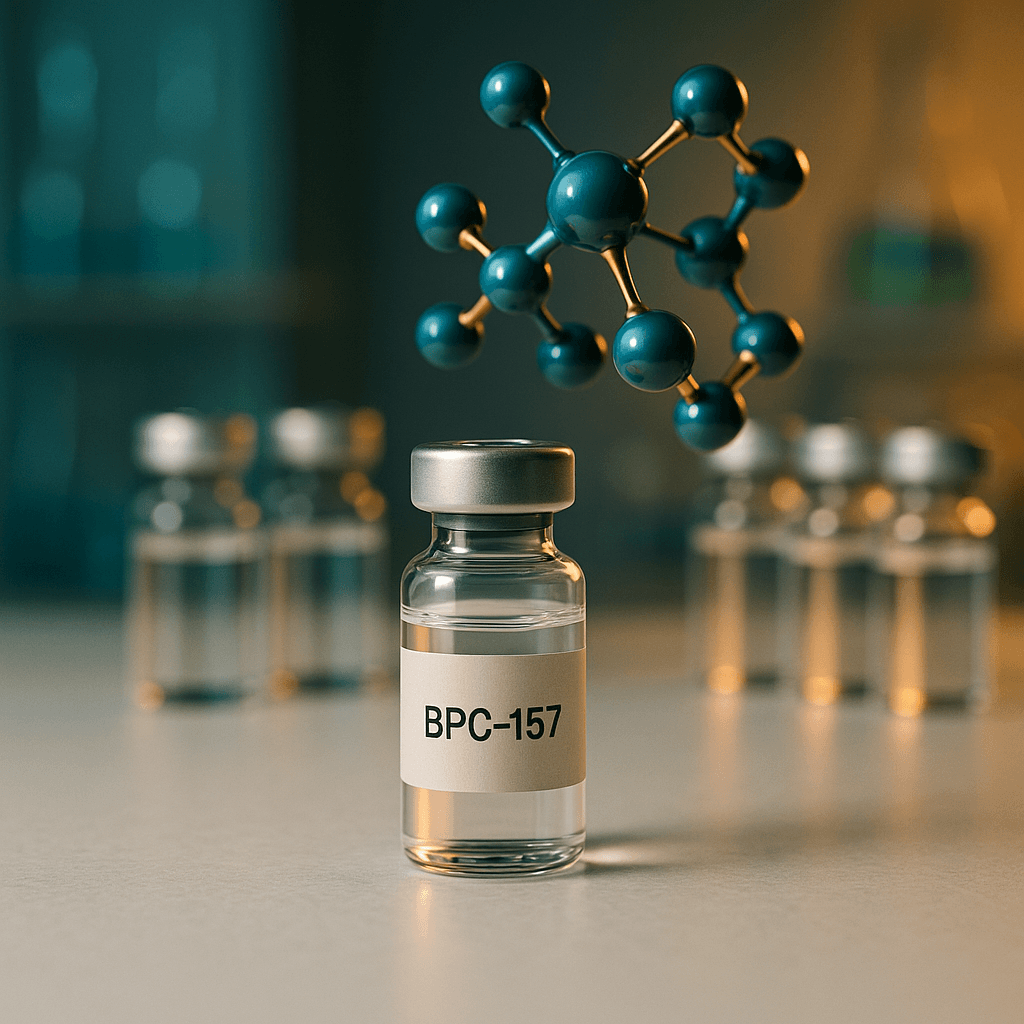
BPC-157: Unlocking the Potential of a Peptide for Healing and Gut Health
A comprehensive guide to understanding the promising therapeutic applications of this unique peptide.
What is BPC-157? A Deep Dive into a Promising Peptide
Imagine a compound that could potentially accelerate healing throughout your body and offer significant relief from digestive distress. This intriguing possibility is at the forefront of discussions surrounding BPC-157, a synthetic peptide that has garnered considerable attention in the scientific community. Derived from a protein naturally found in stomach acid, its name, “Body Protective Compound,” aptly hints at its purported protective and regenerative properties. What sets BPC-157 apart is its remarkable stability, unique oral bioavailability for a peptide, and its demonstrated localized healing effects in preclinical studies.
While research is predominantly in the preclinical phase, the growing interest and early findings suggest a future where BPC-157 could play a significant role in therapeutic interventions. Understanding its mechanisms and potential applications is crucial for anyone interested in advanced health and recovery strategies. For reliable information on peptides like BPC-157, consider exploring resources like peptide repo, which offers in-depth scientific insights.
BPC-157 and Gut Health: A Stomach’s Best Friend?
The gastrointestinal tract is a complex system, and maintaining its health is paramount to overall well-being. BPC-157 has shown particularly promising results in research focused on gut health. Often referred to as a potent “stomach protectant compound,” studies suggest its capacity to aid in the healing of various digestive ailments. Preclinical investigations have explored its effects on conditions such as inflammatory bowel diseases (IBD), gastric ulcers, and general damage to the digestive tract lining.
BPC-157 gut healing potential offers relief from digestive distress. This peptide accelerates healing throughout your body.
Accelerating Injury Recovery: The Peptide Healing Power of BPC-157
Beyond its gastrointestinal benefits, BPC-157 is gaining recognition for its profound impact on injury recovery. The peptide healing potential extends to musculoskeletal tissues, including tendons, ligaments, muscles, and bones. Research indicates that BPC-157 can significantly accelerate the healing process and improve the structural integrity of damaged tissues.
Studies have documented faster healing times and enhanced tissue quality following injuries in animal models treated with BPC-157. This suggests potential applications for a wide spectrum of conditions, from acute sports injuries and post-surgical recovery to the management of chronic pain related to tissue degeneration. The proposed mechanisms involve promoting the expression of crucial growth factors, increasing blood flow to injured areas to deliver necessary nutrients and cellular components, and reducing localized inflammation, all of which contribute to a more efficient and robust healing cascade.
Administration and Dosage Considerations for BPC-157
The administration of BPC-157 in research settings has explored various routes, including oral ingestion and direct injection (subcutaneous or intramuscular). The choice of administration method often depends on the targeted area for therapeutic effect. For instance, oral administration might be favored for gut-related issues, while injections could be utilized for localized musculoskeletal injuries.
It is important to note that dosage ranges observed in preclinical studies are not to be interpreted as clinical recommendations. The effective and safe dosage for human use is a subject of ongoing investigation. Therefore, any consideration of using BPC-157 for therapeutic purposes must involve consultation with qualified healthcare professionals who can provide personalized guidance based on the latest scientific understanding and individual health needs.
Navigating the Peptide Research Landscape: Limitations and Future Directions for BPC-157
While the potential of BPC-157 is exciting, it is crucial to acknowledge the current limitations in its peptide research. The vast majority of existing studies have been conducted on animal models, and large-scale, rigorous human clinical trials are still needed to definitively establish its safety and efficacy in humans. This gap in human data means that widespread clinical application is not yet established.
Future research endeavors are essential to explore optimal dosing strategies, understand any potential long-term effects, and identify specific therapeutic indications where BPC-157 may offer the most significant benefits. The journey of BPC-157 from laboratory findings to potential clinical reality is an ongoing process that requires continued scientific investigation and validation. For those seeking to understand the broader landscape of peptide science, peptide repo serves as a valuable repository of scientific information.
Conclusion: The Promising Future of BPC-157 in Health and Recovery
In summary, BPC-157 presents a compelling profile with significant potential for enhancing gut health and accelerating injury recovery. Its unique properties as a protective and regenerative peptide have positioned it as a molecule of great interest in the scientific and health communities. However, it is imperative to approach this topic with an emphasis on evidence-based information and professional medical guidance.
For individuals keen on exploring the scientific underpinnings of BPC-157 and other peptides, peptide repo is an excellent resource for detailed information. Remember, peptide repo is dedicated to providing scientific data and does not offer vendor information.